Founding Director
Camilla
Founded Nice Place on the belief that the right adjectives, applied early, hold any project together. Personally trained most of the studio and remembers several of their names.
Architects & Interior Designers · London
A work of fiction — the promotional site for the novel Sycophants & Sociopaths by Paul Nelson
Bold visions, agreed centres, and finishes that photograph beautifully. We turn ambition into adaptive reuse — and the occasional structural anomaly into a feature.

The studio, on a representative morning
Nice Place is a full-service architecture and interior design practice built on a simple conviction: great buildings begin with great energy, supportive feedback, and a strong neon sign.
Our process is collaborative, iterative and — where the budget requires — philosophical. We believe in heritage, in craft, and in the quiet power of the right adjective applied early and often. We do not photograph the back of house.
Whatever the brief, our promise never changes: we make nice places, and we would like you to have a nice day.
A coordinated offer across the lifecycle of a building, from the first optimistic sketch to the press release that explains what went right.
Concept to completion. Ceiling heights that perform hierarchy, corridors that widen for some bodies and narrow for others.
Materials, mood and the precise shade of beige that says “heritage” without incurring the cost of any.
We don't fix problems — we reposition them. Yesterday's defect is tomorrow's experiential destination.
Planning, comms and the calm, deliberate language that turns an incident into a resilience test passed.
Formerly the Astute Trading Rooms, the Meridian is our flagship adaptive-reuse scheme — and a case study in turning constraint into character.
When a shallow bowl appeared, inexplicably, in the ground-floor slab, the engineers proposed an excavation. We proposed a better question: what if we don't fix it? The result is the building's celebrated “heart.”
A small, devoted team of architects, designers and digital talent — aligned, engaged, and instructed to look it.
Buddy (Office Morale) was unavailable for a photograph, having been exiled to the car for the duration of an investor visit.
There is no neon sign. There is no bowl in the slab. There is no Camilla. There is a book — and Nice Place Architects is its beating, dysfunctional heart.
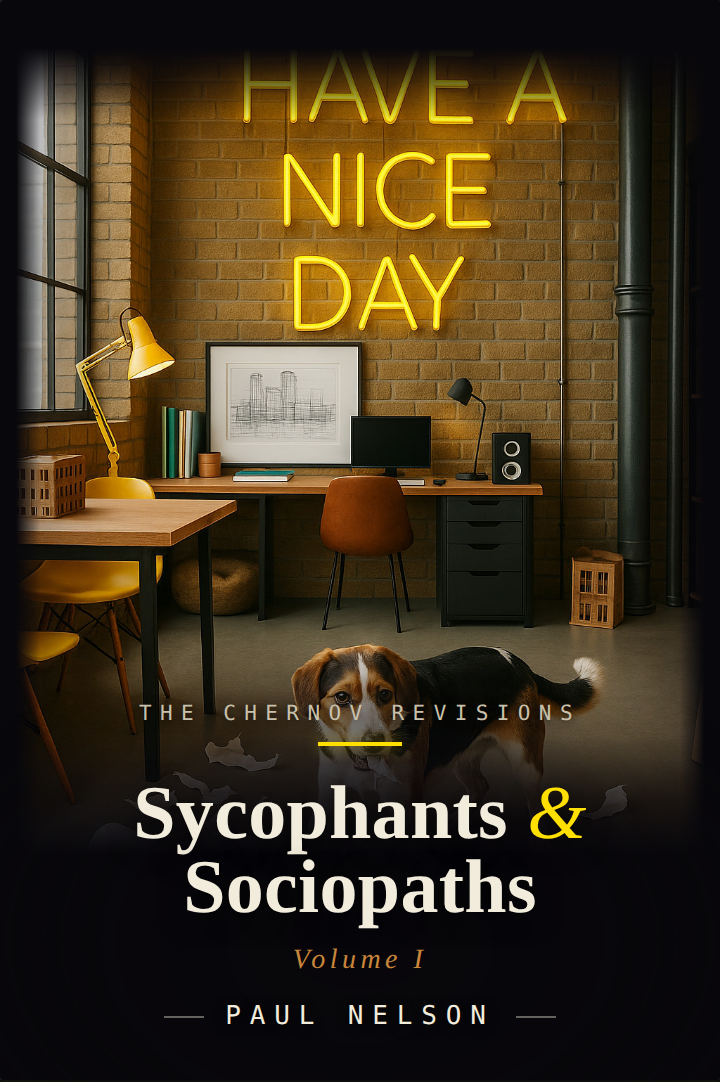
A novel by Paul Nelson
Alex Blackwood is fifty-nine, an architect carried through life by dry wit. He owes the world a book about his great-grandfather Ivan — a forgotten modernist who built grandeur into a society that had abolished it.
What he gets instead is Nice Place, an oligarch with a philanthropic smile, and a quiet system called Pi: a habit, a ratio, a method of shaving language down until nothing sharp is left.
“Once a product reaches its pinnacle, producers stop improving it. Instead, they lower the customer. That way regression looks like progress.”
A tetralogy about flattery, power and the polite machinery of decline — from a London drawing board to a St Petersburg workshop a century earlier. Each volume opens with the same small lie: that the truth is in there.
“The truth is in there.”
An architect, an oligarch and a firm that runs on flattery. Beneath the smiles, a quiet system called Pi begins to show its hand.
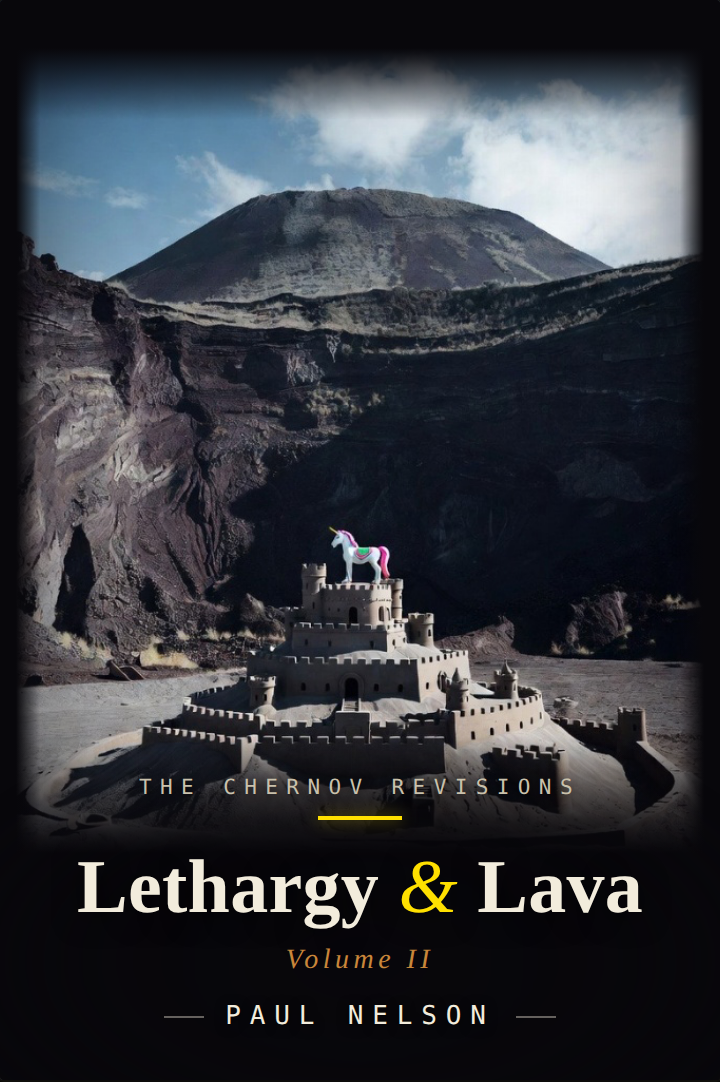
“The truth is in here.”
A volcano, a sandcastle and the slow inertia that lets the pressure build. The firm returns, the horned beasts rise, and someone makes an exit.
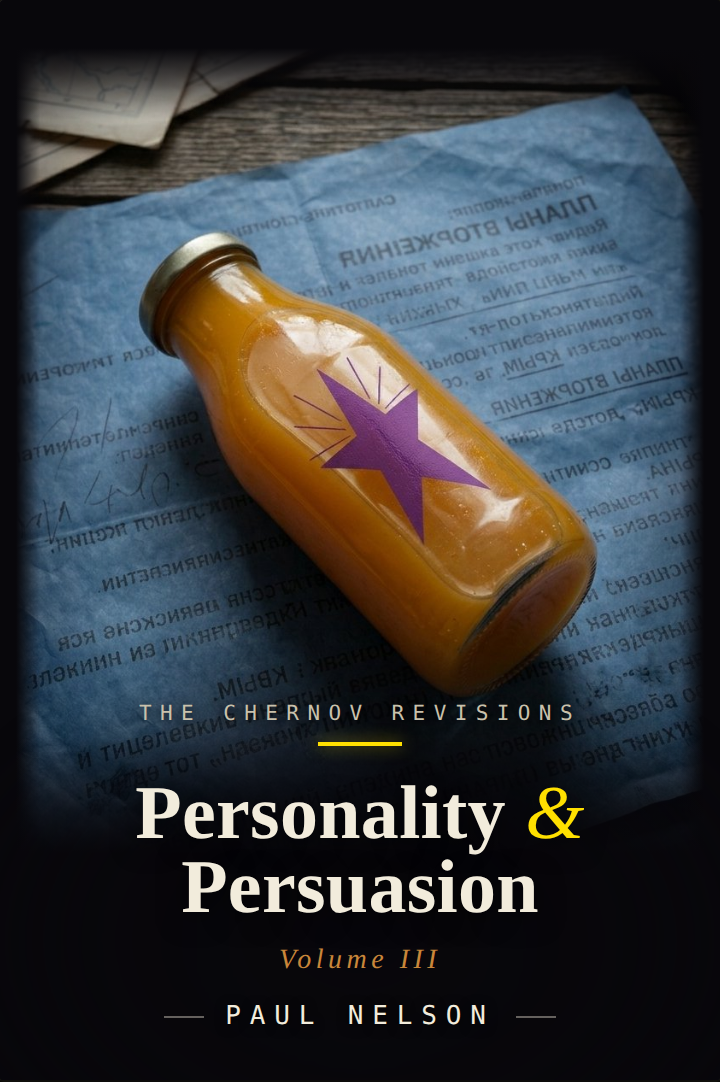
“The toast is in there.”
Brand wars at the Olympics curdle into something larger. Soft power hardens, maps are redrawn, and an invasion arrives dressed as marketing.
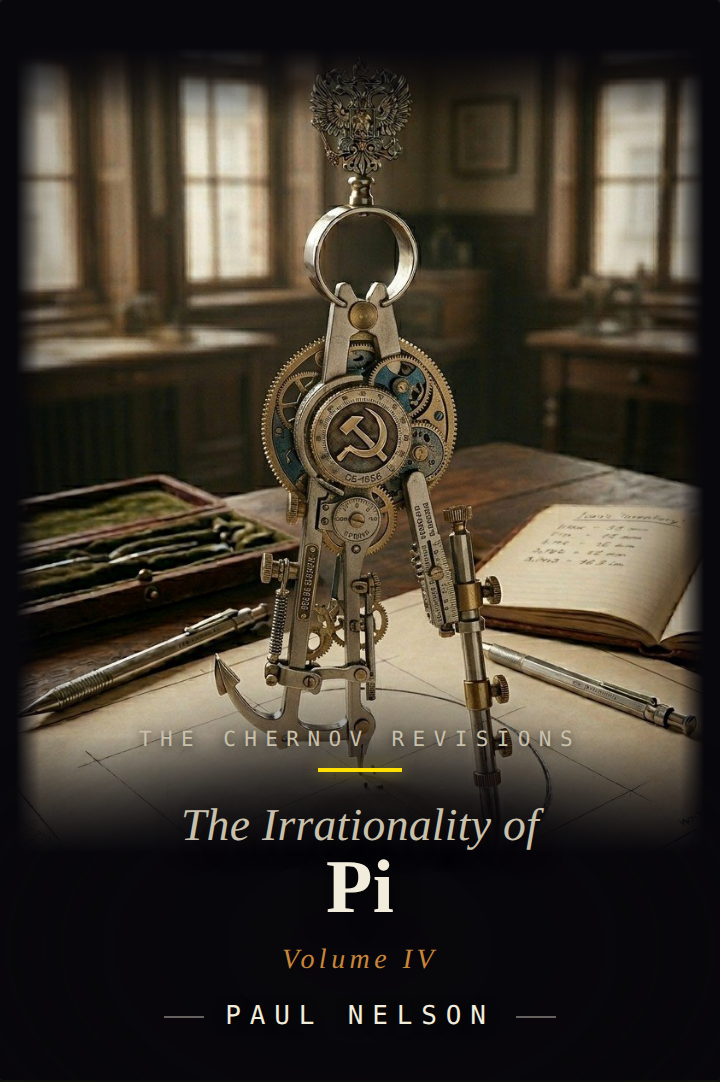
“It's all in there.”
Old St Petersburg, a father's gift of drawing instruments, and the first circle ever drawn. Where the ratio began — and why it never balanced.
The Chernov Revisions · Paul Nelson
Start with Book OneNews on Book Two of The Chernov Revisions, plus the occasional dispatch from the studio. No spam, no alignment, no emojis from management.